
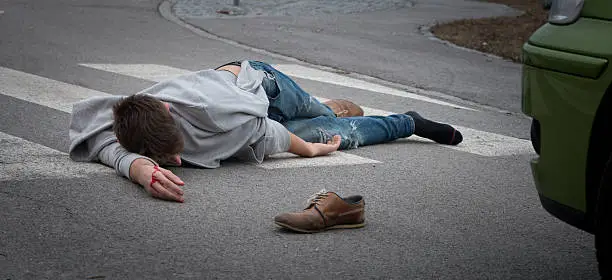
A pedestrian has little protection when struck by a moving vehicle. Even a crash at a relatively low speed can cause painful injuries, medical expenses, lost income, and lasting changes to daily life.
A pedestrian accident attorney investigates the moments before the collision to determine whether the driver failed to use reasonable care. This may involve studying traffic signals, video footage, witness statements, vehicle damage, mobile phone records, and medical evidence.
The purpose is not simply to show that a vehicle struck you. The evidence must explain what the driver did wrong, how that conduct caused the collision, and what losses you suffered.
Building a Clear Timeline of the Collision
A strong pedestrian accident claim usually begins with a timeline. The attorney works backward from the moment of impact and asks what each person could see, when they could see it, and how much time the driver had to react.
Important questions may include:
- Where was the pedestrian before entering the road?
- Was the pedestrian inside a marked or unmarked crosswalk?
- What did the traffic signal display?
- Which direction was the vehicle travelling?
- Was the driver turning or travelling straight?
- Was another vehicle blocking the driver’s view?
- Was the driver speeding or distracted?
- Were streetlights working?
- What were the weather and road conditions?
- Did the driver brake or try to avoid the collision?
A police report may answer some of these questions. However, a complete investigation often requires evidence that was unavailable to the responding officer.
Texas Laws That May Apply to a Pedestrian Accident
Texas pedestrian duties and driver responsibilities appear in Chapter 552 of the Texas Transportation Code.
The rule that applies depends on where and how the pedestrian was crossing.
Pedestrians at Traffic Signals
Under Section 552.001, pedestrians must follow traffic control signals that specifically apply to them. Other traffic signals may control their movement when a separate pedestrian signal is not present.
Signal timing records, video footage, and witness accounts may help establish whether a pedestrian had permission to enter the roadway.
Drivers Approaching Crosswalks
Section 552.003 generally requires a driver to stop and yield to a pedestrian in a crosswalk when no traffic control signal is operating if the pedestrian is on the vehicle’s half of the road or approaching close enough from the opposite half to be in danger.
The same section states that pedestrians may not suddenly leave a curb or place of safety and enter a crosswalk so close to a vehicle that stopping is impossible.
These rules mean that the location of the pedestrian, the speed of the vehicle, and the available stopping distance can all become important.
Pedestrians Crossing Outside a Crosswalk
Section 552.005 generally requires a pedestrian crossing outside a marked or unmarked crosswalk at an intersection to yield to vehicles.
That does not automatically excuse careless driving. Section 552.008 requires drivers to exercise due care to avoid colliding with pedestrians. It also addresses giving a warning when necessary and using proper caution when a child or an apparently confused or incapacitated person is on the road.
A pedestrian accident lawyer examines all applicable rules instead of assuming that one fact decides the case.
Safe Speed Under Existing Conditions
Texas law does not make the posted speed limit the only measure of safe driving. Transportation Code Section 545.351 requires drivers to travel at a speed that is reasonable and prudent under the existing circumstances.
A driver travelling at the posted limit might still be moving too fast for darkness, rain, heavy pedestrian activity, limited visibility, or traffic near a school.
What a Pedestrian Accident Attorney Must Establish
A negligence claim generally depends on four connected elements.
The Driver Owed a Duty of Care
Drivers have a responsibility to operate their vehicles with reasonable care. This includes paying attention, maintaining control, following traffic signals, and watching for people who may be in or near the road.
The Driver Breached That Duty
A breach occurs when the driver fails to act with reasonable care. Examples may include:
- Failing to yield
- Running a red light
- Turning without checking the crosswalk
- Driving too fast for the conditions
- Looking at a mobile phone
- Driving while impaired
- Failing to use headlights
- Ignoring a pedestrian already in the roadway
A traffic citation may support an investigation, but it does not automatically decide the civil claim. Likewise, a driver may be found negligent even if no citation was issued.
The Breach Caused the Collision
The evidence must connect the driver’s conduct to the impact.
Imagine that a driver was using a phone several minutes before the collision but had put it away well before approaching the pedestrian. That earlier phone use may not prove causation.
If video and phone records instead show that the driver was reading a message while entering the crosswalk, the connection may be much stronger.
The Pedestrian Suffered Damages
The final element concerns the harm caused by the crash. Damages may include physical injuries, medical expenses, lost income, pain, impairment, and other legally recognized losses.
The amount must be supported by records rather than guesswork.
Evidence Used to Prove Driver Negligence
Pedestrian crashes often leave little physical protection between the person and the vehicle. For that reason, evidence from the road, surrounding properties, and vehicle can become especially important.
Video From Nearby Cameras
Video may come from traffic cameras, homes, stores, parking lots, dashboard cameras, or doorbell systems.
It may show:
- The pedestrian entering the crosswalk
- The vehicle’s movement
- The traffic signal
- Whether the driver slowed down
- Visibility at the intersection
- The position of other vehicles
- The moment of impact
Many camera systems erase older footage automatically. A pedestrian accident attorney may send a preservation request asking the owner of the recording to retain it.
Witness Statements
Independent witnesses may have seen the vehicle speeding, turning without stopping, or entering the intersection after the signal changed.
Witnesses may also describe whether the pedestrian was visible and how long the person had been in the road.
Names and contact information should be collected quickly. Memories may become less precise as time passes.
Physical Evidence at the Scene
The location and condition of physical evidence can help reconstruct the collision.
Relevant details may include:
- Tire marks
- Broken vehicle parts
- Blood or personal belongings
- Damage to the hood or windshield
- The final position of the vehicle
- The location where the pedestrian landed
- Crosswalk markings
- Streetlights and signs
- Trees, parked vehicles, or structures affecting visibility
Measurements and photographs can help an accident reconstruction specialist analyze vehicle movement and the likely point of impact.
Vehicle Data and Inspection
Some vehicles store information about speed, braking, acceleration, and other actions before a crash. The exact information depends on the vehicle and its technology.
Mechanical inspection may also reveal worn brakes, damaged lights, steering problems, or tires that affected the driver’s ability to stop.
Electronic data should be downloaded by a qualified person. Improper handling can damage the information or make its accuracy more difficult to establish.
Mobile Phone Records
When distraction is suspected, legally obtainable mobile phone records may show calls, messages, or data activity around the time of the crash.
An attorney may also seek information from applications or the driver’s device through formal legal procedures.
Phone activity alone does not prove distraction. The timing and nature of the activity must be compared with video, witness accounts, and the collision timeline.
Police and Emergency Records
Police reports may identify the parties, witnesses, road conditions, statements, citations, and the officer’s initial observations.
Emergency call recordings can show when the crash was reported and what witnesses said immediately afterward. Ambulance and emergency treatment records can document your condition at the scene.
An officer’s report is important, but it may not include every available fact. A civil investigation can uncover additional video, electronic data, and medical evidence.
Medical Documentation
Medical records connect the collision to your injuries and treatment.
Important documentation may include:
- Ambulance records
- Emergency room notes
- Diagnostic imaging
- Surgical reports
- Medication records
- Therapy notes
- Follow up care
- Medical bills
- Work restrictions
- Future treatment recommendations
Tell your medical providers how the injury occurred and describe your symptoms accurately. Gaps in treatment may allow an insurer to argue that your condition improved or came from another cause.
Comparing Evidence and Its Purpose
A single item rarely explains the whole collision. A strong investigation compares independent sources.
| Evidence | What it may help prove |
| Camera footage | Signal status, vehicle movement, and pedestrian location |
| Witness accounts | Driver behavior and visibility before impact |
| Vehicle data | Speed, braking, and acceleration |
| Phone records | Possible distraction at the time of the collision |
| Scene photographs | Road layout, visibility, and physical evidence |
| Police records | Initial statements, citations, and identified witnesses |
| Medical files | Injuries, treatment, and connection to the crash |
| Employment records | Income and work opportunities lost during recovery |
| Expert analysis | Stopping distance, reaction time, and collision mechanics |
When sources agree, they can support one another. If they conflict, an attorney investigates why.
A Practical Example at a Texas Intersection
Consider a hypothetical crash involving a driver making a right turn at an intersection.
The driver says the pedestrian entered the crosswalk suddenly. The pedestrian remembers having a walk signal but cannot recall how long it had been active.
A nearby store provides video showing that the pedestrian entered with the walk signal and was already halfway across the lane. Vehicle data shows no meaningful braking before impact. A witness says the driver was looking left for oncoming traffic while turning right.
Together, the evidence may support the conclusion that the driver failed to check the crosswalk before turning.
The video explains where the pedestrian was. The vehicle data shows the driver’s response. The witness statement explains where the driver was looking. Medical records then connect the impact to the pedestrian’s injuries.
What if the Driver Blames the Pedestrian?
Drivers and insurance companies may argue that the pedestrian crossed outside a crosswalk, ignored a signal, wore dark clothing, or entered the road without enough time for the driver to stop.
Texas uses a proportionate responsibility system. Under Texas Civil Practice and Remedies Code Section 33.001, a claimant generally cannot recover damages if their responsibility is greater than 50 percent.
When the claimant’s responsibility is 50 percent or less, any recovery may be reduced by the assigned percentage.
Shared responsibility does not mean a driver’s actions should be ignored. Even when a pedestrian crosses outside a marked crosswalk, the investigation should consider the driver’s speed, attention, visibility, and opportunity to avoid the collision.
An Athens pedestrian accident lawyer can examine both sides of the account and challenge blame that is not supported by evidence.
Who May Be Responsible Besides the Driver?
The driver is usually the first person investigated, but another party may also have responsibility.
Possible parties may include:
- An employer whose employee caused the collision while performing job duties
- The owner of a vehicle negligently entrusted to an unsafe driver
- A manufacturer responsible for a defective vehicle component
- A government entity responsible for certain dangerous road conditions
Claims involving a public entity have special rules and may require notice much sooner than an ordinary personal injury claim. Liability depends on the facts, applicable law, and available evidence.
Losses That Should Be Documented
Your case involves more than the medical bill from the first day.
Keep records of:
- Hospital and doctor bills
- Prescription costs
- Physical therapy
- Medical equipment
- Travel required for treatment
- Lost wages
- Reduced working hours
- Assistance needed at home
- Scarring and physical limitations
- Emotional and psychological treatment
Do not estimate future medical needs yourself. A qualified medical provider can explain whether additional treatment may be required.
You can learn more about available legal assistance on the Mandy Rodriguez Law personal injury page.
Steps You Can Take to Preserve Evidence
Your health and safety should come first. Once you are able, these actions may help protect useful information:
- Report the crash to the police.
- Seek medical care promptly.
- Photograph your injuries and damaged belongings.
- Save the clothing and shoes worn during the crash.
- Collect witness contact details.
- Write down what you remember.
- Save insurance letters and messages.
- Avoid posting about the collision online.
- Do not sign a release you do not understand.
- Speak with an attorney before evidence disappears.
Do not attempt to contact witnesses repeatedly or obtain private records yourself. Your attorney can use appropriate legal procedures.
Texas Deadline for Filing a Pedestrian Accident Claim
Texas Civil Practice and Remedies Code Section 16.003 generally requires a personal injury lawsuit to be filed within two years after the claim accrues.
Exceptions may shorten or extend the deadline in particular circumstances. A government related claim may have an earlier notice requirement.
The legal deadline is not the only concern. Video can be erased, vehicles can be repaired, and witnesses can become difficult to locate. Starting the investigation early may help preserve stronger evidence.
Frequently Asked Questions
What evidence does a pedestrian accident attorney collect?
An attorney may collect video footage, witness statements, police records, vehicle data, phone records, scene photographs, medical files, and employment documentation. The evidence needed depends on how and where the crash occurred.
Can I make a claim if I was not inside a marked crosswalk?
Possibly. Crossing outside a crosswalk may affect responsibility, but it does not automatically excuse a driver who was speeding, distracted, impaired, or otherwise careless. The full circumstances must be investigated.
What does a pedestrian accident lawyer charge?
Fee arrangements vary. Many personal injury lawyers use a contingency fee, meaning the fee depends on a recovery. Ask the attorney to explain the written agreement, case expenses, and what happens if there is no recovery.
How should I compare lawyers in Athens, TX?
Ask about experience with pedestrian injury claims, methods used to preserve video and vehicle data, communication practices, fees, and who will handle your case. Avoid choosing a lawyer based only on promises about a result.
Is a pedestrian accidents lawyer different from a car accident lawyer?
The practice areas can overlap, but pedestrian cases involve special questions about crosswalks, signals, visibility, reaction time, and severe bodily injuries. Confirm that the lawyer has experience investigating claims involving injured pedestrians.
Talk to a Pedestrian Accident Attorney in Athens
Proving driver negligence requires a clear timeline supported by reliable evidence. Video, witnesses, vehicle data, medical records, and Texas traffic laws may reveal whether the driver failed to yield, drove too fast, or did not keep a proper lookout.
A pedestrian accident attorney can preserve evidence, respond to unfair blame, identify responsible parties, and explain your legal options.
Contact Mandy Rodriguez Law to discuss your Texas pedestrian accident and the evidence available in your case.
This article provides general information and does not constitute legal advice. Reading it does not create an attorney client relationship.