
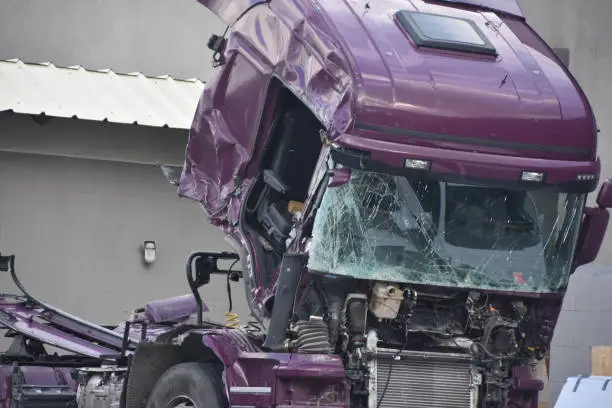
When an 18 wheeler crash raises questions about driver fatigue, one of the first questions is how long the driver had been working.
Federal rules limit how long most commercial truck drivers may drive and remain on duty. Electronic records can help show whether those limits were followed, while company records may reveal whether scheduling affected compliance.
An 18 wheeler accident attorney can review these records to understand what happened before the crash. This guide focuses on hours-of-service rules and electronic logging device (ELD) data. For a broader look at how a carrier’s conduct may affect a claim, read our guide to investigating trucking company negligence.
Why Driver Fatigue Is a Legal Issue
A tired driver may react slowly, drift from a lane, misjudge stopping distance, or fail to notice traffic ahead. Because the consequences of a crash involving a loaded tractor-trailer can be severe, federal regulations set limits on driving time.
These rules are found in 49 CFR Part 395 and are enforced by the Federal Motor Carrier Safety Administration (FMCSA). These rules apply to drivers and motor carriers. A carrier’s conduct may also be investigated if it directed, pressured, or allowed a driver to violate rules that applied to the trip.
A truck accident lawyer reviewing a crash will often compare the legal limits with the driver’s actual schedule.
Key Hours-of-Service Limits for Property-Carrying Drivers
For most drivers of property-carrying commercial vehicles in interstate commerce, the general limits are:
- 11-hour driving limit: A driver may drive up to 11 hours after 10 consecutive hours off duty.
- 14-hour window: Driving is not permitted after the 14th consecutive hour after coming on duty, following 10 consecutive hours off duty.
- 30-minute break: A break is required once a driver has accumulated eight hours of driving without at least a 30-minute interruption in driving. The interruption may be off-duty, sleeper berth, or on-duty time that is not driving.
- 60/70-hour limit: The applicable limit is 60 hours in 7 consecutive days for carriers that do not operate every day, or 70 hours in 8 consecutive days for carriers that do.
- 34-hour restart: A driver may reset the weekly count after a qualifying period of at least 34 consecutive hours off duty.
Exceptions and special provisions exist, including adverse driving conditions that allow limited additional time, short-haul rules, and sleeper berth provisions. Some intrastate and exempt operations follow different rules. An attorney reviews which rules applied to the particular driver and trip.
What ELD Records May Show
Most drivers who must keep records of duty status use an electronic logging device connected to the truck’s engine. Depending on the device and the case, ELD data may show:
- Driving time and duty status changes
- Times the vehicle was moving or stopped
- Location information at recorded intervals
- Vehicle miles and engine hours
- Edits or annotations made to the log
- Driving time not assigned to any driver
An attorney may compare these entries against the crash timeline to see how long the driver had been on duty and whether the logs appear consistent.
Some drivers are exempt from ELD requirements, in which case paper logs or other time records may exist. A lack of an ELD does not necessarily mean there is no record.
Supporting Documents That Can Test the Logs
Logs can be incomplete or inaccurate. Supporting records may help confirm or challenge them, including:
- Dispatch and delivery schedules
- Bills of lading and shipping documents
- Fuel and toll receipts
- Payroll and settlement records
- Electronic messages between the driver and carrier
- GPS or telematics data
If a driver’s log shows rest at a time when a receipt shows the truck at a fuel stop hundreds of miles away, that inconsistency may be significant. An 18 wheeler accident lawyer may also examine whether delivery deadlines or compensation methods encouraged drivers to push past safe limits.
Why Timing Matters for These Records
Carriers are generally required to keep records of duty status and supporting documents for six months. Telematics data, messages, and video can also be overwritten or deleted sooner. After a serious crash, an attorney may send a written preservation request to the carrier and other involved parties.
Engine and event data varies by truck and installed equipment. Some trucks record more information than others, and a qualified technician may be needed to download and interpret it correctly. The existing guide on evidence collected after a Texas truck crash explains these limitations in more detail.
An Hours-of-Service Violation Does Not Decide the Case by Itself
Evidence of a violation can be important, but it is not the end of the analysis. A civil claim generally requires showing that negligence caused the crash and the injuries.
For example, if a driver exceeded the driving limit but the crash was caused by another driver’s sudden lane change, the violation may not be what caused the collision. On the other hand, evidence that a driver was well past the limits, fell asleep, and crossed into oncoming traffic may be directly relevant.
Texas also uses a proportionate responsibility system. Under Texas Civil Practice and Remedies Code Section 33.001, a claimant generally cannot recover damages when their percentage of responsibility is greater than 50 percent. If responsibility is 50 percent or less, recovery may be reduced by that percentage. Trucking defendants and insurers often attempt to shift blame, which is another reason the evidence matters.
Who May Be Responsible When Fatigue Is a Factor?
The driver may not be the only responsible party. The motor carrier may also be responsible for a driver’s actions when the driver was acting within the scope of employment. Separate claims, such as negligent hiring or supervision, depend on the facts.
Other parties, such as a freight broker, shipper, or maintenance contractor, may be involved in some cases, although their responsibility depends on the circumstances and applicable law. Identifying each potential party matters because they may control different records and carry different insurance.
Texas Filing Deadline
Under Texas Civil Practice and Remedies Code Section 16.003, most personal injury lawsuits must be filed within two years after the claim accrues. Exceptions and notice requirements may apply, particularly when a government entity is involved.
Steps That Can Help Protect Your Claim
- Seek medical care and follow your doctor’s instructions.
- Write down what you remember about the truck, driver, and crash while it is fresh.
- Record the truck’s company name, DOT number, and license plate if you can do so safely.
- Avoid giving a recorded statement to the carrier’s insurer before getting legal advice.
- Contact an attorney promptly so that preservation requests can be sent while records still exist.
- Keep medical bills, work records, and insurance letters.
Frequently Asked Questions
Can ELD records be changed? Some entries can be edited, and edits are generally recorded with annotations. An attorney may review the edit history and compare the log with other records.
What if the truck did not have an ELD? Some drivers are exempt. Paper logs, dispatch records, receipts, and other documents may still show how long the driver was working.
Does an hours-of-service violation mean I will win my claim? No. A violation must be connected to what caused the crash, and every case depends on its own facts.
How do I find an 18 wheeler accident attorney near me? A local attorney can be helpful because they understand East Texas roads and courts. Mandy Rodriguez Law is based in Athens and assists clients in surrounding communities.
What does a truck accident lawyer charge? Many attorneys use contingency fee agreements, meaning the attorney is paid from a recovery. Fee percentages and case expenses vary, so review the written agreement carefully.
Speak With an 18 Wheeler Accident Attorney in Athens
As an 18 wheeler accident attorney, I understand that a serious truck crash can affect your health, your income, and your family. My goal is to explain the legal process clearly, move quickly to preserve important records, and help you make informed decisions about your claim.
An 18 wheeler accident lawyer can review driver logs, company records, and other evidence to understand what led to the crash. Every case is different, and representation does not guarantee a particular result.
Learn more about working with an 18 wheeler accident attorney in Athens, or schedule a free consultation with Mandy Rodriguez Law. You can also call (903) 675-2900.
This article provides general information and does not constitute legal advice. Reading it does not create an attorney client relationship.